In multifamily developments, signage is often treated as one of the final tasks on a long construction checklist. By the time signage conversations begin, most major design and budget decisions have already been made. Yet signage is one of the few elements every resident and visitor interacts with daily. It guides movement, communicates identity, ensures accessibility, and quietly defines how a community feels.
Well-designed signage does not draw attention to itself. It works in the background, offering clarity without interruption. Poorly designed signage does the opposite. It introduces confusion, visual clutter, and inconsistency — even in otherwise beautiful spaces.
Signage should not be viewed as decoration. It is an integral part of architecture and spatial planning.
From the moment someone arrives at an apartment community, signage shapes their experience. Exterior monument signs and building identification create the first cue of organization and quality. Clear entries, readable building numbers, and intuitive directional signs communicate trust. Even before a leasing agent greets a prospect, signage has already spoken on the property’s behalf.
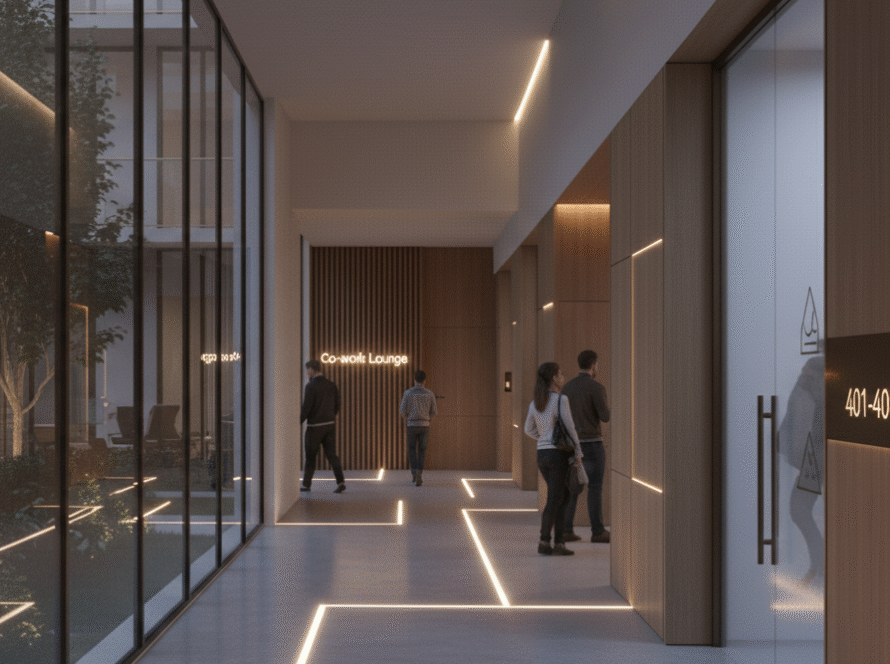
Inside the community, signage moves from first impression to daily function. Residents rely on wayfinding signs, unit identification, amenity markers, and safety indicators as part of their everyday routines. When these elements are thoughtfully designed and consistently executed, the environment feels calm, professional, and easy to navigate. When they are not, even simple tasks become frustrating.
One of the most overlooked aspects of signage is accessibility. ADA signage is often approached as a legal requirement rather than a design responsibility. Yet accessible signage directly affects people’s independence and dignity. Braille, tactile lettering, and contrast standards exist to ensure everyone can move through a space confidently. When ADA signage is designed from the beginning rather than added later, it integrates seamlessly into the overall aesthetic instead of standing apart from it.
Consistency is another defining attribute of successful signage systems. In many multifamily projects, signage is produced in pieces over time, often by multiple vendors. Minor differences in font, material, spacing, or finish may seem insignificant individually, but collectively they weaken the visual identity of a property. A unified signage system, designed and fabricated under one vision, creates cohesion that residents may not consciously notice — but they absolutely feel.
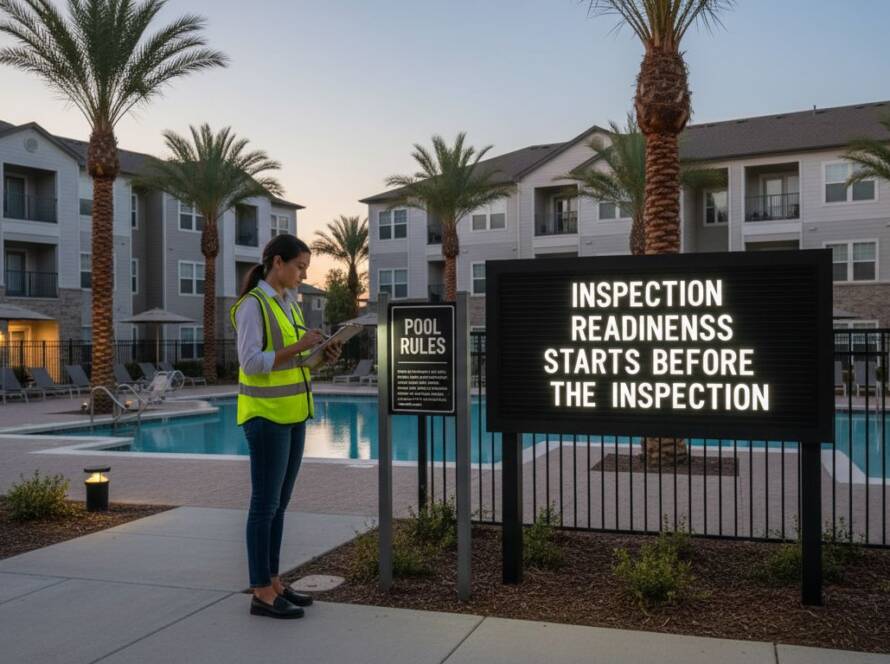
The technical side of signage is equally important. Permitting requirements vary by city, and exterior signage in particular can face strict regulations. When signage is not planned with local codes in mind, projects risk delays, redesigns, and costly corrections during final inspections. Signage works best when it is coordinated early, alongside architectural drawings and construction schedules.
At MAWBRA INC, signage is treated as a complete system rather than a collection of individual signs. Design, branding, ADA compliance, fabrication, permitting, and installation are all parts of one process. This integrated approach ensures that signage does what it is meant to do — guide, inform, and represent the community — without becoming a point of friction during construction or close-out.
Apartment communities are built to be lived in, day after day. Signage should support that experience quietly and reliably. When signage is approached with the same care as architecture and interiors, it stops being an afterthought and becomes part of the place itself.
Good signage disappears into the environment.
Great signage makes everything work.